Are Your Optical Tolerances Too Tight? Balancing Performance, Cost and Lead Time
For custom optical components, tighter tolerances to achieve higher quality and improved optical performance do not automatically result in a better outcome.


Are Your Optical Tolerances Too Tight? Balancing Performance, Cost and Lead Time
For custom optical components, tighter tolerances to achieve higher quality and improved optical performance do not automatically result in a better outcome.

CaF₂, ZnS or ZnSe? Which Infrared Material Is Right for Your Application?
The key to selecting an infrared optical material is finding which material best matches the requirements of the application.
Optical Blanks vs Finished Components: Which Is Right for Your Application?
A practical guide to deciding when optical blanks make more sense than finished components, including considerations around flexibility, lead times, in-house manufacturing capability and production requirements.

Why More Optical Manufacturers Are Choosing Semi-Finished Optical Materials
For manufacturers with established optical production capabilities, semi-finished optical materials can offer a practical way to improve flexibility, reduce material waste and maintain greater control over the finishing process. Rather than outsourcing every stage of manufacture, businesses can focus resources where they add the greatest value while tailoring components to their own specifications.

UQG Optics Supports Cambridgeshire U16 Girls Cricket Team
UQG Optics is proud to announce a three-year sponsorship of the Cambridgeshire U16 Girls County Age Group cricket team. As a company that has been part of the local community for more than 70 years, supporting young people and creating opportunities within Cambridgeshire remains an important part of who we are.
Beyond Germanium: When to Consider Chalcogenide Glass for Infrared Optics
Selecting an infrared optical material is rarely a simple matter of comparing optical specifications. Every application presents its own technical, manufacturing and commercial requirements, making material selection an important part of the overall design process.
Beyond Germanium: Why More Optical Designers Are Considering Chalcogenide Glass
For decades, Germanium has been one of the most widely used materials in infrared optical design. Its optical characteristics have made it a trusted choice for thermal imaging, surveillance systems, industrial sensing and other infrared applications.

Choosing the Right Optical Glass for Precision Optical Applications
When engineers design optical systems, performance starts with the material. Before a lens is polished, a prism is coated or a window is installed, the optical glass has to meet the demands of the application. Transmission, refractive index, thermal stability and durability all shape how the finished component performs.

How Optical Components Power Modern Medical Imaging Systems
Medical imaging has transformed the way healthcare professionals diagnose, monitor and treat disease. Modern healthcare increasingly depends on the ability to capture clear, reliable and highly detailed images. Optical technologies support a wide range of medical and clinical applications, including endoscopy, spectroscopy, microscopy and diagnostic imaging systems.

The Future of Optical Manufacturing: Trends in Automation and Sustainability
The expectations placed on optical components continue to increase. Precision requirements are tighter, lead times are shorter and performance standards are higher across sectors such as life sciences, defence and advanced manufacturing. To keep pace, optical manufacturing is changing. Automation is becoming central to how optical components are produced, while sustainability is increasingly shaping how those processes are designed and optimised.

Inside UQG’s Quality Control Process: How We Ensure Optical Precision
At UQG Optics, each stage of manufacturing is monitored and checked before components move forward, rather than relying on a single final inspection. This helps reduce risk early and keeps production consistent. This sits alongside UQG’s wider optical manufacturing capability, covering processes from initial machining through to finishing and inspection.
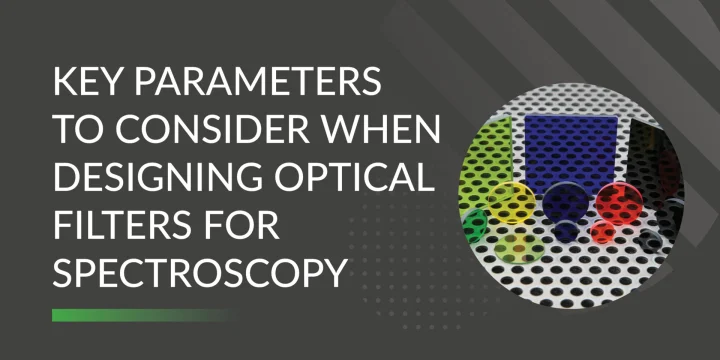
Key Parameters to Consider When Designing Optical Filters for Spectroscopy
In modern spectroscopy systems, particularly Raman and fluorescence techniques, optical filters are essential components that determine signal quality and measurement accuracy. For researchers and engineers, understanding the key parameters involved in filter design is fundamental to optimising system performance.
Suppliers of Custom and Stock Optics
Over 70 Years Experience and Expertise in Optics
International Shipping Available
If you cannot find what you are looking for contact UQG
+44 (0) 1223 420329