


News: Optical Products

Optical Manufacturers Are Choosing Semi-Finished Materials

Why More Optical Manufacturers Are Choosing Semi-Finished Optical Materials

For manufacturers with established optical production capabilities, semi-finished optical materials can offer a practical way to improve flexibility, reduce material waste and maintain greater control over the finishing process. Rather than outsourcing every stage of manufacture, businesses can focus resources where they add the greatest value while tailoring components to their own specifications.

Read more
Optical Glass. Choosing the Right Material

Choosing the Right Optical Glass for Precision Optical Applications

When engineers design optical systems, performance starts with the material. Before a lens is polished, a prism is coated or a window is installed, the optical glass has to meet the demands of the application. Transmission, refractive index, thermal stability and durability all shape how the finished component performs.

Read more
Modern Medical Imaging Systems

How Optical Components Power Modern Medical Imaging Systems

Medical imaging has transformed the way healthcare professionals diagnose, monitor and treat disease. Modern healthcare increasingly depends on the ability to capture clear, reliable and highly detailed images. Optical technologies support a wide range of medical and clinical applications, including endoscopy, spectroscopy, microscopy and diagnostic imaging systems.

Read more
Optical Manufacturing Trends in Sustainability

The Future of Optical Manufacturing: Trends in Automation and Sustainability

The expectations placed on optical components continue to increase. Precision requirements are tighter, lead times are shorter and performance standards are higher across sectors such as life sciences, defence and advanced manufacturing. To keep pace, optical manufacturing is changing. Automation is becoming central to how optical components are produced, while sustainability is increasingly shaping how those processes are designed and optimised.

Read more
Why Chalcogenide is the new go to

Why Chalcogenide Is the New Go‑To Material for Infrared Optics

IR systems are evolving rapidly, and so are the materials used to build them. As industries demand lighter components, wider spectral performance, better manufacturability and more stable supply chains, Chalcogenide glass has quickly emerged as a versatile and future‑ready optical material.

Read more
When to specify zinc selenide in modern optical systems

When to Specify Zinc Selenide in Modern Optical Systems

In this article we look at the benefits of Zinc Selenide as an optical material, examine how it compares with Germanium and other IR substrates, and explain where ZnSe offers clear advantages for today’s optical designers and engineers.
We’ve also provided a convenient summary table at the end of the article for quick comparison between the two materials.

Read more
A Look At Optics For Harsh Environments

Optics for Harsh Environments

Optics used in defence systems, deep‑sea drilling platforms and space vehicles face conditions far beyond those found in typical industrial settings. High shock loads, corrosive atmospheres, extreme heat and cold, abrasive particles, radiation exposure and rapid pressure changes all push optical materials to their limits.

Read more
Sapphire VS Fused Silica Windows

Which Window Material Is Right for You? Sapphire vs Fused Silica

Optical windows are fundamental components in imaging, sensing and laser‑based systems, acting as protective barriers while maintaining high levels of optical clarity. Among the most widely used materials for optical windows are sapphire and fused silica. These materials both offer excellent performance, but differ significantly in their mechanical, thermal and optical characteristics.

Read more
Schott filters article image

Choosing the Right Schott Filter for Imaging & Spectroscopy

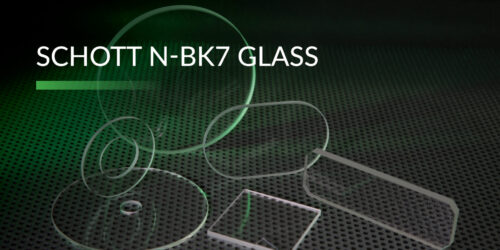
While N‑BK7 provides a stable, high‑quality substrate for lenses, windows and prisms, Schott’s extensive filter glass range enables engineers and scientists to shape light with precision. From isolating fluorescence bands to blocking infrared radiation, these filters are essential in imaging, spectroscopy, machine vision and analytical instrumentation.
This article explains how Schott filters work, the differences between filter types, and how to select the right material for your application.

Read more
Zinc Sulphide (ZnS)

How is Zinc Sulphide used in Industrial Optics Manufacturing?

Optical components used for industrial and technical applications require a range of properties, from transparency or opacity to durability and resistance to environmental stress. One compound that is increasingly rising to the challenge is zinc sulphide (ZnS). Known for its versatility and optical properties, ZnS plays a pivotal role in a range of applications, from infrared imaging to aerospace systems.

Read more
Selecting the right optical components supplier

Why R & D Success Can Rely on Selecting the Right Optical Components Supplier

R&D success often hinges on the smallest details. So whether you’re developing a new imaging system, refining a prototype or conducting advanced scientific experiments, the quality and reliability of your optical components can play a pivotal role. This means that selecting the right supplier isn’t just a procurement decision, it’s a strategic move that can determine the trajectory of your project.

Read more
Key factors to look for in an optical component supplier

Key Factors to Look for in an Optical Components Supplier

Choosing the right supplier of optical components can mean the difference between project success and costly delays. No matter what kind of cutting-edge technology you’re developing — whether it’s medical devices, aerospace systems or research equipment — your choice of supplier directly impacts quality, timeline and overall project outcomes.

Read more
Custom optical components when standard solutions aren't enough

Custom Optical Components: When Standard Solutions Aren’t Enough

From the advanced imaging systems in today’s smartphones to the sophisticated medical devices used to diagnose life-threatening conditions, optical components are fundamental to countless cutting-edge technologies. While off-the-shelf optical solutions serve many general applications, they often fall short when it comes to the specific demands of specialised projects that push technological boundaries.

Read more