




Forensic science is based on vital factors and skills such as precision, accuracy and the ability to uncover hidden details.
For forensic experts, optical technologies play a pivotal role in all these areas, transforming invisible evidence into visible, analysable data.
From crime scene investigation to laboratory analysis, optical instruments enable professionals to detect and interpret clues that would otherwise remain concealed.
This article explores the diverse applications of optical technologies in forensic science and explains why they are indispensable in modern investigations.
1. Visualising Trace Evidence
Trace evidence, such as clothing fibres, hair, skin and paint fragments, often holds critical information about a crime. However, these materials are typically microscopic and difficult to detect with the naked eye.
Optical instruments like stereomicroscopes and compound microscopes allow forensic scientists to examine these samples in detail. High-quality lenses and precision optics provide magnification and clarity, enabling them to identify structural patterns, colour variations and surface textures.
Advanced optical systems can also incorporate polarised light microscopy, which is particularly useful for analysing fibres and crystalline substances. By manipulating light waves, polarised optics reveal unique optical properties that help distinguish between similar materials, aiding in accurate identification.
2. Enhancing Fingerprint Analysis
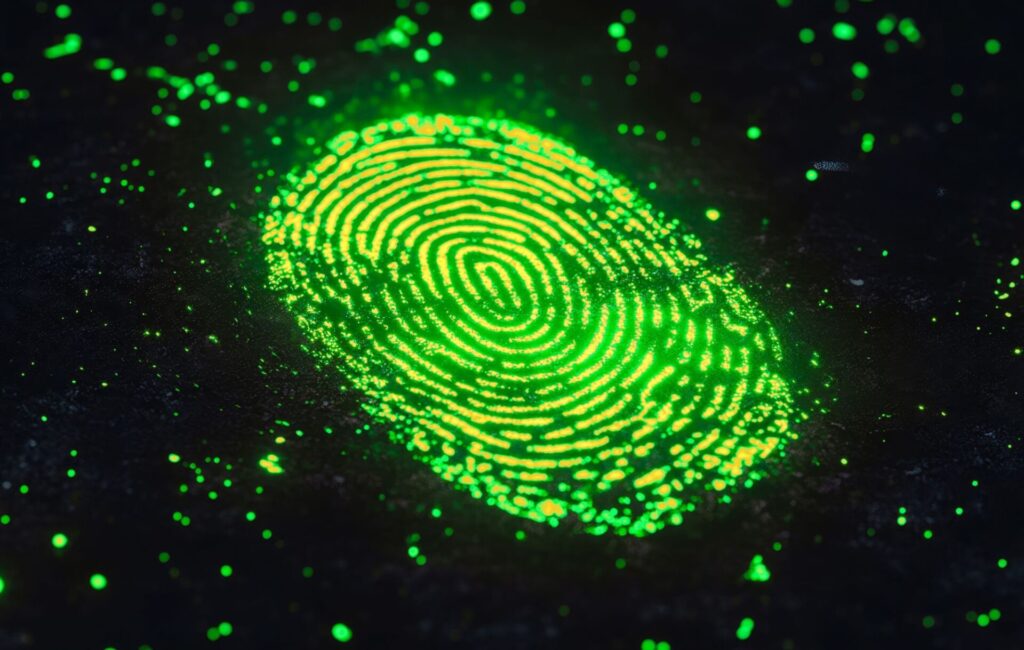
Despite first being used in forensics in the 19th century, fingerprints remain one of the most reliable forms of personal identification.
While traditional powder and chemical methods are still in use, optical technologies have revolutionised fingerprint detection. Techniques such as laser illumination and alternate light sources (ALS) allow investigators to visualise latent prints on challenging surfaces without damaging the evidence.
ALS systems use specific wavelengths of light, ranging from ultraviolet to infrared, to highlight residues left by fingerprints. When combined with optical filters, these systems can isolate the fluorescence of fingerprint components, making them stand out against complex backgrounds.
This non-destructive approach preserves the integrity of the evidence for further analysis.
3. Document Examination and Counterfeit Detection
Optical technologies are essential in forensic document analysis, particularly in detecting alterations, forgeries and counterfeit currency.
Instruments such as spectral imaging systems and video spectral comparators employ controlled lighting and optical filters to examine inks, paper fibres and security features under different wavelengths.
For example, UV light can reveal hidden security patterns, while infrared imaging can expose erased or overwritten text. These optical techniques provide investigators with a clear view of tampered areas, ensuring that even the most sophisticated forgeries are uncovered.
4. Bloodstain Pattern Analysis
Bloodstains can offer valuable insights into the events surrounding a crime, but their visibility often depends on lighting conditions.
Optical technologies, including high-intensity light sources and colour filters, help forensic teams detect blood traces that are invisible under normal illumination. Certain wavelengths cause blood to absorb or fluoresce differently than surrounding materials, making it easier to locate and document stains.
Additionally, optical imaging systems can capture detailed photographs of blood patterns, which are later analysed to determine the direction, force, and origin of impact. This information is crucial for reconstructing crime scenes and corroborating witness statements.
5. Digital Imaging and Spectroscopy
Modern forensic laboratories increasingly rely on digital imaging systems combined with optical components to record and analyse evidence. High-resolution cameras equipped with precision lenses capture minute details of samples, while spectroscopic techniques provide chemical information based on light interaction.
For instance, UV-Vis spectroscopy and Raman spectroscopy use optical principles to identify substances such as drugs, explosives and pigments. These methods are non-invasive and highly accurate, making them ideal for forensic applications where sample preservation is critical.
6. Optical Fibre Technology in Surveillance
Beyond the laboratory, optical technologies extend to surveillance and security systems.
Optical fibre sensors can detect vibrations, temperature changes and even acoustic signals, providing real-time monitoring of sensitive areas.
In forensic investigations, these systems help track movements or detect tampering, offering valuable intelligence for case resolution.
Why Optics Matters in Forensics
The integration of optical technologies into forensic science is not merely about improving visibility.
It’s about enhancing accuracy, reliability and efficiency. By harnessing the properties of light, forensic experts can uncover evidence that would otherwise remain hidden, interpret complex patterns and present findings with scientific confidence.
As technology advances, the role of optics in forensics will continue to grow. Innovations such as hyperspectral imaging, laser-based scanning and miniaturised optical sensors promise even greater capabilities, ensuring that forensic science remains at the cutting edge of criminal investigation.
Final Thoughts
From microscopic analysis to advanced imaging and spectroscopy, optics empower investigators to reveal the truth with unparalleled precision.
For organisations seeking reliable optical components such as lenses and filters for imaging systems, UQG Optics provides custom solutions that meet the demanding standards of forensic applications.
With over seven decades of continuous business, UQG Optics has built a solid reputation based on a dedicated team that goes to extraordinary lengths to deliver outstanding service and product quality.
To find out more about our high precision custom and stock optics, call us on 01223 420329 or email our sales team at info@uqgoptics.com.