For manufacturers with established optical production capabilities, semi-finished optical materials can offer a practical way to improve flexibility, reduce material waste and maintain greater control over the finishing process. Rather than outsourcing every stage of manufacture, businesses can focus resources where they add the greatest value while tailoring components to their own specifications.
UQG Optics is proud to announce a three-year sponsorship of the Cambridgeshire U16 Girls County Age Group cricket team. As a company that has been part of the local community for more than 70 years, supporting young people and creating opportunities within Cambridgeshire remains an important part of who we are.
Selecting an infrared optical material is rarely a simple matter of comparing optical specifications. Every application presents its own technical, manufacturing and commercial requirements, making material selection an important part of the overall design process.
For decades, Germanium has been one of the most widely used materials in infrared optical design. Its optical characteristics have made it a trusted choice for thermal imaging, surveillance systems, industrial sensing and other infrared applications.
When engineers design optical systems, performance starts with the material. Before a lens is polished, a prism is coated or a window is installed, the optical glass has to meet the demands of the application. Transmission, refractive index, thermal stability and durability all shape how the finished component performs.
Medical imaging has transformed the way healthcare professionals diagnose, monitor and treat disease. Modern healthcare increasingly depends on the ability to capture clear, reliable and highly detailed images. Optical technologies support a wide range of medical and clinical applications, including endoscopy, spectroscopy, microscopy and diagnostic imaging systems.
The expectations placed on optical components continue to increase. Precision requirements are tighter, lead times are shorter and performance standards are higher across sectors such as life sciences, defence and advanced manufacturing. To keep pace, optical manufacturing is changing. Automation is becoming central to how optical components are produced, while sustainability is increasingly shaping how those processes are designed and optimised.
At UQG Optics, each stage of manufacturing is monitored and checked before components move forward, rather than relying on a single final inspection. This helps reduce risk early and keeps production consistent. This sits alongside UQG’s wider optical manufacturing capability, covering processes from initial machining through to finishing and inspection.
In modern spectroscopy systems, particularly Raman and fluorescence techniques, optical filters are essential components that determine signal quality and measurement accuracy. For researchers and engineers, understanding the key parameters involved in filter design is fundamental to optimising system performance.
Choosing the right optical window for your project is a multi-step process that requires careful consideration of wavelength, environment, coatings and cost. By taking a structured approach, engineers and researchers can ensure that their optical systems deliver optimal performance and reliability.
IR systems are evolving rapidly, and so are the materials used to build them. As industries demand lighter components, wider spectral performance, better manufacturability and more stable supply chains, Chalcogenide glass has quickly emerged as a versatile and future‑ready optical material.
In this article we look at the benefits of Zinc Selenide as an optical material, examine how it compares with Germanium and other IR substrates, and explain where ZnSe offers clear advantages for today’s optical designers and engineers.
We’ve also provided a convenient summary table at the end of the article for quick comparison between the two materials.
Infrared systems are evolving rapidly, driven by demand for lighter, more efficient and more cost‑effective components and as designers push for higher performance at lower cost, the choice of optical material becomes a defining factor in the success of any IR system.
Optics used in defence systems, deep‑sea drilling platforms and space vehicles face conditions far beyond those found in typical industrial settings. High shock loads, corrosive atmospheres, extreme heat and cold, abrasive particles, radiation exposure and rapid pressure changes all push optical materials to their limits.
Chalcogenide glass has evolved from a niche infrared material into a mainstream alternative to germanium. With supply pressures and rising costs affecting germanium availability, chalcogenide offers a stable, scalable and high‑performance solution for infrared optics.
Optical windows are fundamental components in imaging, sensing and laser‑based systems, acting as protective barriers while maintaining high levels of optical clarity. Among the most widely used materials for optical windows are sapphire and fused silica. These materials both offer excellent performance, but differ significantly in their mechanical, thermal and optical characteristics.
While N‑BK7 provides a stable, high‑quality substrate for lenses, windows and prisms, Schott’s extensive filter glass range enables engineers and scientists to shape light with precision. From isolating fluorescence bands to blocking infrared radiation, these filters are essential in imaging, spectroscopy, machine vision and analytical instrumentation.
This article explains how Schott filters work, the differences between filter types, and how to select the right material for your application.
High‑precision imaging systems, lasers and sensing instrumentation all use coatings to determine efficiency and accurate light movement.
This guide looks at three of the most widely used coating types; anti‑reflection (AR), mirror and filter coatings, and explains how they work, where they’re used and what factors to consider when designing them into optical systems.
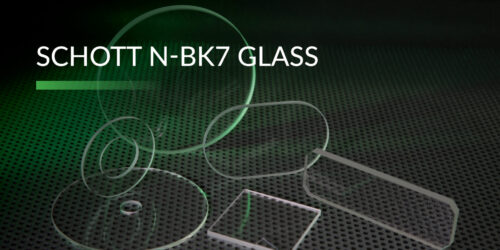
Schott N-BK7 glass has become the industry’s gold standard. Known for its excellent transmission, low dispersion and cost‑effectiveness, BK7 is the backbone of precision optics worldwide.
In this guide, we’ll explore what BK7 glass is, review its properties and applications and discuss why it remains the preferred choice for precision optics.
As we move into 2026, industrial, medical and scientific optics are expected to deliver breakthroughs that will influence our daily lives in areas such as communications, healthcare and manufacturing.
This blog explores what the emerging trends for 2026 might be as well as presenting a round up of the most significant innovations of 2025.
Welcome to UQG Optics! It looks like you are visiting from the US. Select your preferred currency below to see appropriate pricing. Contact us for additional support or to discuss specific requirements.
Welcome to UQG Optics! It looks like you are visiting from outside the UK. Select your preferred currency below to see appropriate pricing. Contact us for additional support or to discuss specific requirements.
We use optional cookies to review analytics that help us to improve our website experience. By clicking accept, you are giving consent for us to do this. You can find out more and manage cookies in our privacy policy.